Springs · Guelph
Garage Door Balance Adjustment
Since the new insulated panels went in, the door feels like a different animal. It closes with a thud, the opener labours where it used to hum, and lifting it by hand takes a proper heave rather than a fingertip.
Garage Door Balance Adjustment
In plain words
Older detached garages often have extension springs stretched along each horizontal track rather than a shaft above the door. Balancing these works differently: the tension comes from how far each spring is stretched when the door is closed, and it is set by moving the cable attachment along the track hanger or changing the hook position. Both sides are adjusted equally so the door stays level, and the containment cable running through each spring is checked at the same time. The door is opened and clamped so the springs are relaxed during the work, then tested by hand across its travel until it rests where it is left.
How the visit goesThe door has grown heavy so gradually you stopped noticing, until a visitor tried to lift it and could not. The opener still manages, but it sounds strained, the chain slaps on the way up, and the wall button gets pressed twice most mornings.
Guelph
How the visit goes
Cables, drums and whether the door sits level
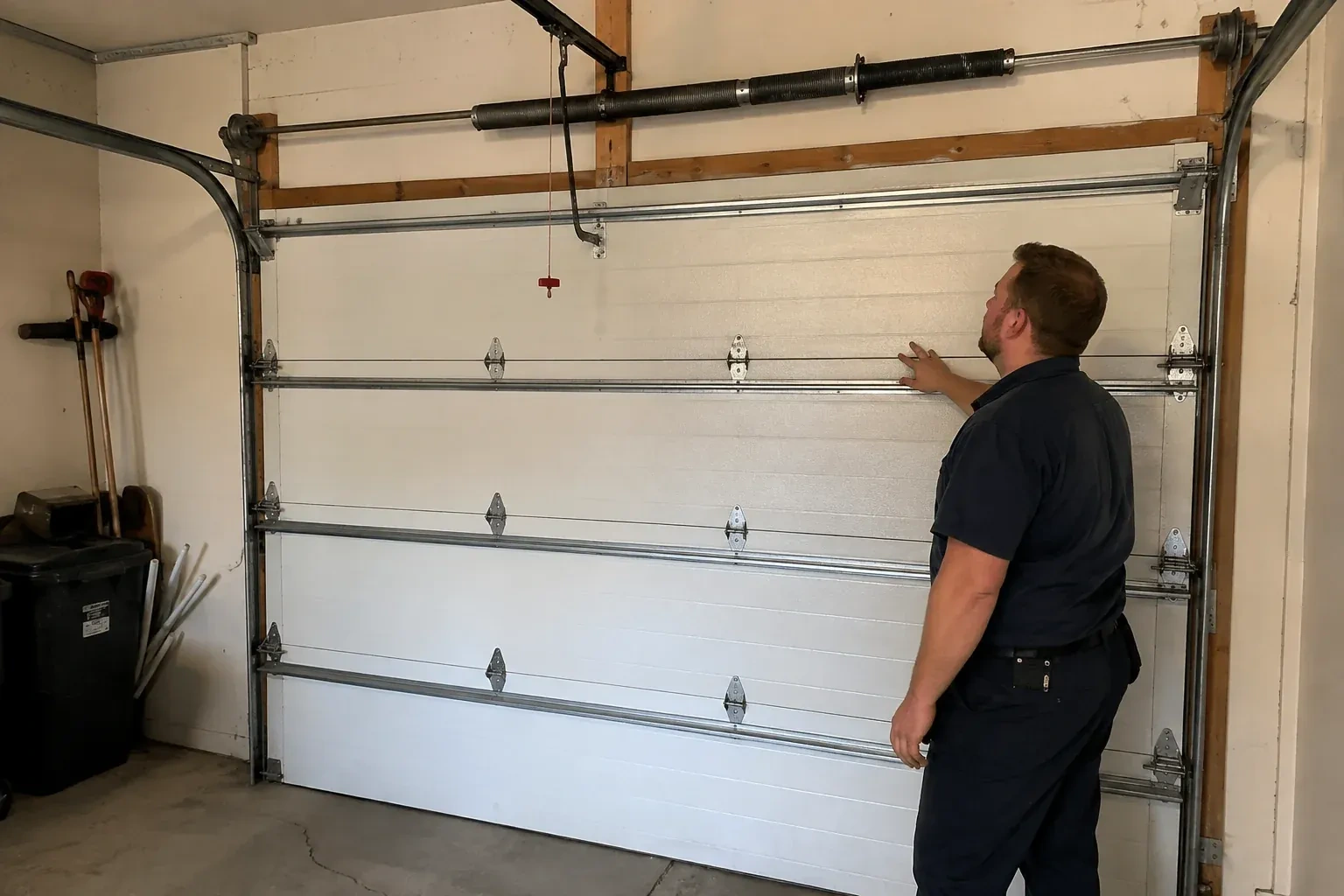
A door that is out of level is usually a cable story rather than a spring story. The technician checks that each cable wraps its drum in a single neat layer with the same number of wraps on both sides, that the drum set screws are tight on the shaft, and that neither cable is frayed or rusting at the bottom bracket. A tape across the bottom of the door in the closed position shows whether one corner sits high. If it does, the cables are reset on the drums so the door is level before spring tension is judged, because a crooked door binds in its track and feels heavy regardless of how the springs are wound.
Adjusting extension springs at the hook
On an extension system the door is opened fully and clamped so each spring hangs slack, and the tension is changed by moving the S-hook or the cable clip to a different hole in the track hanger, or by shortening the cable at the clip. A hole further back stretches the spring more when the door closes and adds lift; a hole further forward reduces it. Both sides are moved the same amount so the door stays level, and the pulleys and containment cables are checked as the hooks are reset. The clamps come off and the door is tested by hand at several heights, then adjusted again if needed.
Watching for the early signs of drift
You will now know what the door feels like when it is right, which makes small changes easy to spot. A door that begins to close with a heavier thud, an opener that pauses at the top or hums a little longer, a gap appearing under one corner, or a door that no longer quite stays fully open when released are all early signs. Cold weather can make the door feel a little heavier for a few weeks without anything being wrong. But a door that stalls, races or no longer passes its balance check is telling you to stop using it and book an inspection promptly rather than waiting out the season, since the cause is not always minor.
Garage Door Balance Adjustment
In the van
- Torsion springs, matched pair
- Cable drums
- Winding bars
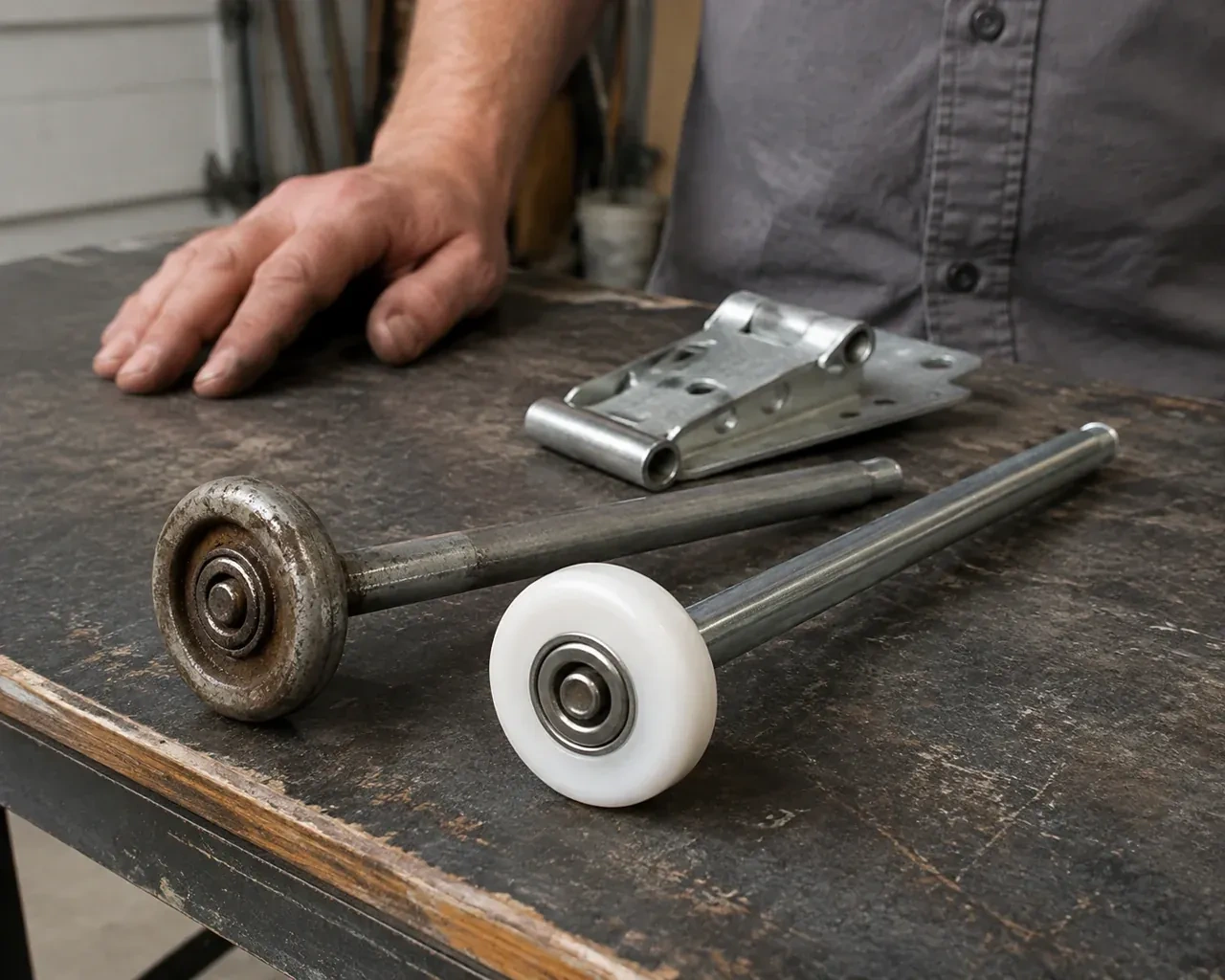
- Nylon or steel rollers
- Replacement hinges
What affects the quote
Same fees day, night or weekend
1Extension-spring containment and pulleys
On an extension door, a missing containment cable is added and worn pulleys are replaced with the adjustment. Each is a small parts line on the quote.
2Opener adjustment and tests
Resetting travel limits and force settings on the opener and running the reversal tests is a short step that follows every balance job and is named in the quote when needed.
3Condition of cables and drums
Cables that are fraying or drums with worn grooves found during the check are recommended for replacement while the system is being set, and quoted as their own items.
Garage Door Balance Adjustment: questions
Should I lubricate anything after the visit?
A little, twice a year. Use a product sold for garage doors on the spring coils, hinge pins, roller stems, bearings and bracket pins, and cycle the door a few times to work it in. The tracks want a wipe, not a spray, because a slick track lets the rollers skid and gathers grit. Skip thick grease. Low friction is what lets the springs' setting hold true.
What safety tests are done after the adjustment?
Two are standard. A piece of two-by-four is laid flat on the floor in the door's path and the door closed onto it; it must reverse and return to open. Then, as the door closes, an object is passed through the photo-eye beam near the floor, and again the door must reverse. Both depend on a balanced door, which is why they come after the adjustment rather than before.
What is the red cord hanging from the opener for?
It is the manual release. Pulling it disconnects the door from the opener's trolley so the door can be moved by hand, which is how the balance test is done and how you get the car out during a power cut. The industry standard calls for it to be red and reachable, no more than about six feet above the floor. Reconnecting is usually as simple as running the opener once.
Springs & Hardware
- Garage Door Hinge ReplacementThe roller at the top of the second panel is leaning outward and only half of the wheel is still in…
- Garage Door Track Repair or ReplacementYou bought the house with a door that sticks near the top of its travel.
- Garage Door Cable ReplacementThe door went up as usual this morning, then stopped a third of the way with one corner higher than…
Garage Door Balance Adjustment near you
Every garage door service we offer in Guelph is described the same way: what you might have noticed, what the technician checks first, how the work is done and what you have afterwards. Start with the symptom you are seeing and the right service will be easy to find.