Repairs · Guelph
Garage Door Safety Inspection
On bright afternoons the door goes down a metre, stops, and climbs back up while the light on the opener blinks. After dark it closes perfectly.
Garage Door Safety Inspection
In plain words
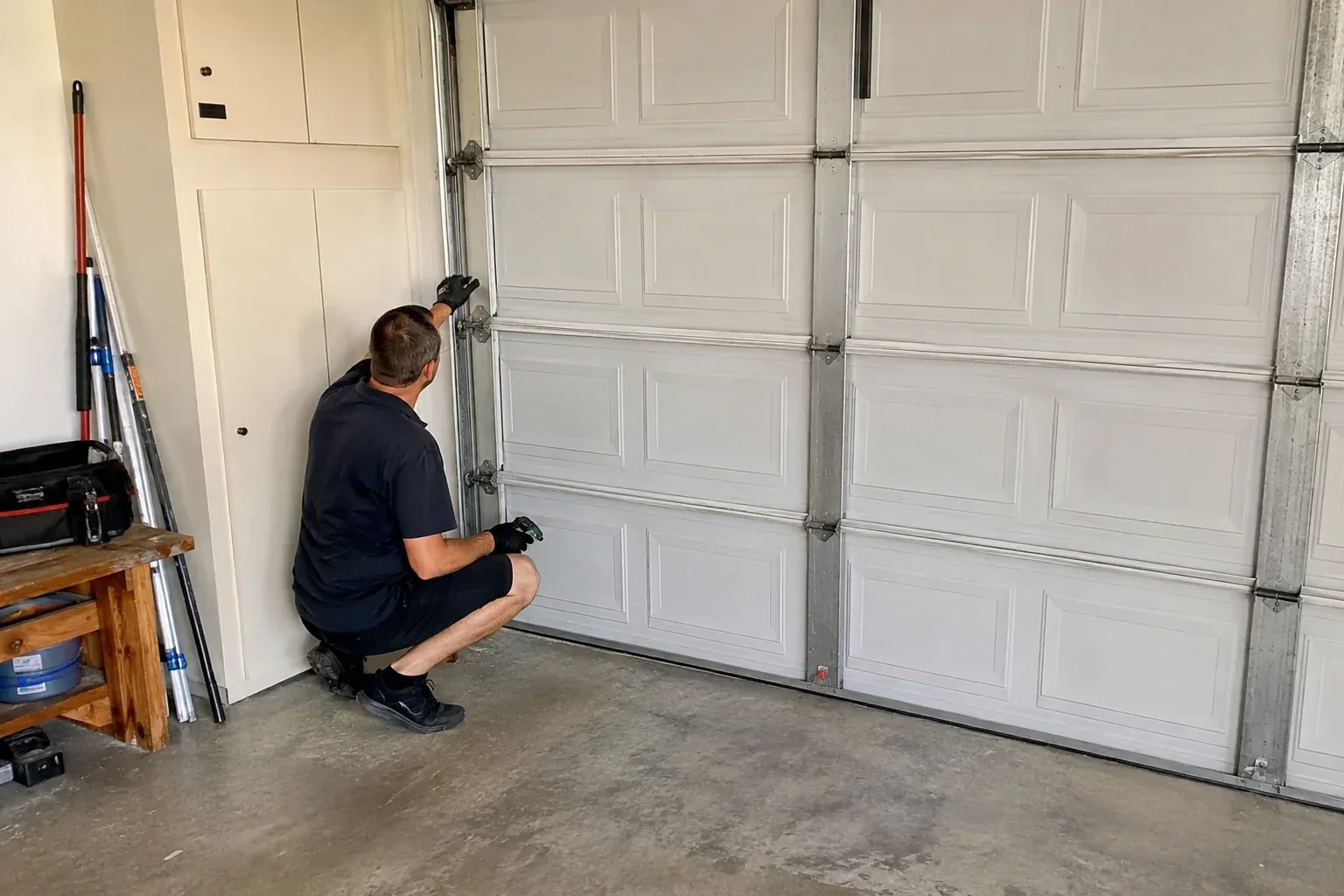
Three tests sit at the heart of the visit. The balance test, done with the opener disconnected, shows whether the springs are still carrying the door's weight or the motor is straining to do it. The contact-reversal test, a flat board laid on the floor, shows whether the door backs off when it meets something solid. The photo-eye test, breaking the beam while the door closes, shows whether the sensors stop it before contact. Each one takes a minute, each answers a different question, and together they tell you the door is doing what it was built to do.
How the visit goesOn bright afternoons the door goes down a metre, stops, and climbs back up while the light on the opener blinks. After dark it closes perfectly. Nothing has changed except the weather.
Guelph
How the visit goes
The opener head, its arm and its safety devices
Turning to the opener, the technician checks that the motor head is secure on its hangers, the rail is straight and its header bracket firmly fixed, and the curved arm meets the door at a bracket that is bolted to a reinforced section rather than thin steel. The chain, belt or screw drive is looked at for slack or wear. The photo eyes are located, their height above the floor noted, their lenses and wiring checked, and the wall control, remotes, keypad and lock or vacation button are each identified so they can be tested in turn. This is also where the manual release cord and handle are confirmed to be within reach and in working order.
Checking the photo eyes
The photo eyes are the pair of small sensors low on each track that watch the opening with an invisible beam. The technician confirms they are mounted at the height the opener maker specifies, aligned so the indicator lights hold steady, clean of grime and frost, and wired securely. Then, with the door closing, the beam is broken with an object; the door should reverse before it reaches anything. A sensor that has been knocked out of line, wired loosely or blinded by low sun explains a great many doors that refuse to close on some afternoons, and the fix is often alignment and a wipe of the lens, done on the spot.
Signs that call for a visit before the next scheduled one
A few things are worth a call the day you notice them: a door that hangs crooked or stops part-way; a cable that looks slack, frayed or wrapped where it should not be; a gap in a torsion spring coil; a door that suddenly feels heavy on the manual release; an opener that reverses for no reason after the photo eyes are wiped; or a deep dent, one from an impact, or one dragging in the track. In each case, leave the door as it is, keep people and vehicles clear, and use another door until it has been looked at. A small cosmetic dent that leaves the door running smoothly can wait for the planned appointment.
Garage Door Safety Inspection
In the van
- Camera for findings
- Socket set and nut drivers
- Inspection checklist and report form
- Spring and cable gauges
- Weatherstrip samples for matching
What affects the quote
Same fees day, night or weekend
1Small parts replaced on the spot
A missing hinge bolt, a stripped track lag or a remote battery can be replaced from the van. Parts fitted this way are listed individually rather than folded into the inspection.
2How many doors are on the property
Each door and opener gets its own inspection and its own record. Two doors in one visit share the travel, but the checks are done in full on both.
3A retest after repairs
When the report lists repairs, a short return visit to rerun the balance, reversal and photo-eye tests once the work is done is quoted as its own item.
Garage Door Safety Inspection: questions
Does winter change what you look for?
Yes, mostly at floor level. Months of slush and road salt reach the lowest hinges, the bottom brackets and the loop of each cable before anything else on the door, so those get a close look for rust. The technician also checks whether the bottom seal has been freezing to the slab, how the drive has coped with cold, stiff starts, and whether frost or salt film has been blinding the sensors near the floor.
What gets lubricated, and what is left dry?
The moving metal-on-metal points get a light coat: the spring coils, the hinge knuckles, the roller bearings and the pins at the bottom brackets. A silicone or lithium product made for doors is used, then the door cycles a few times to carry it in. The tracks are the exception; they are cleaned and left bare, since a slick track lets the wheels skid and holds grit against them.
What is the balance test and why does it matter?
With the opener disconnected, the door is lifted by hand. If it moves with light effort and stays put at waist height, the springs are carrying its weight as designed. If it drifts up, sinks or feels heavy, the springs are out of step with the door and the opener has been doing the lifting. That strain shortens the opener's life and can defeat its reversal settings, which is why balance is checked first.
Repair & Maintenance
- Off-Track Garage Door ResetA delivery van backed into the shop's overhead door this afternoon.
- Garage Door Panel ReplacementYears of slap shots have peppered the lower two sections with dents.
- Garage Door Bottom Seal ReplacementThe garage doubles as a workshop, and with the heater running the floor near the door stays cold…
Garage Door Safety Inspection near you
Every garage door service we offer in Guelph is described the same way: what you might have noticed, what the technician checks first, how the work is done and what you have afterwards. Start with the symptom you are seeing and the right service will be easy to find.