Repairs · Guelph
Garage Door Tune-Up
Since the first cold snap the door has been sluggish. It climbs slowly, hesitates near the top and the opener motor sounds strained.
Garage Door Tune-Up
In plain words
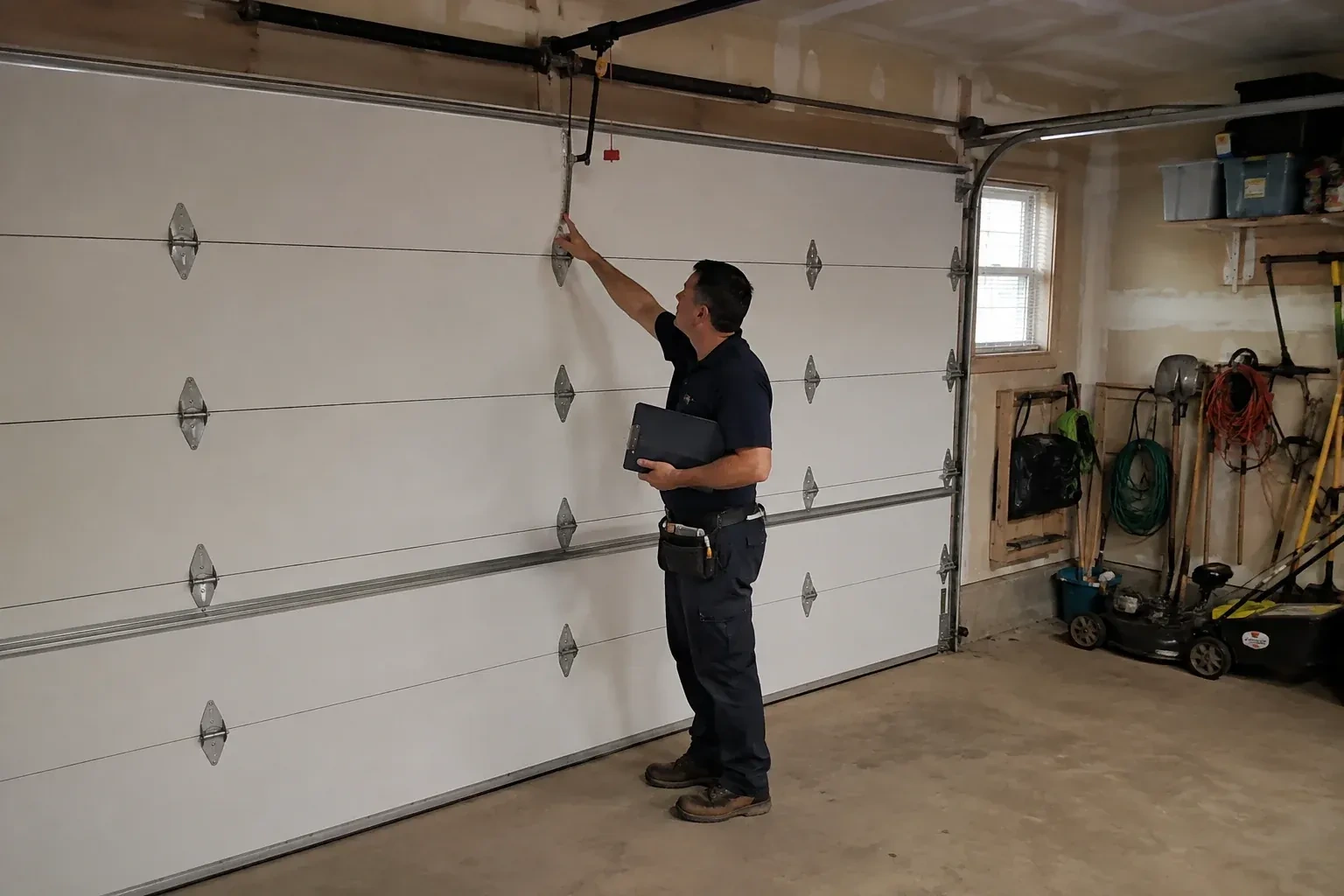
The heart of a tune-up is the balance check. Your springs are meant to carry nearly the whole weight of the door so the opener only has to guide it. When the door is disconnected from the opener and lifted by hand, it should rise without effort, stay open on its own and hold still partway. A door that sinks or feels heavy is telling you the springs have lost tension, and an opener made to move a balanced door is straining. The tune-up identifies this and treats spring adjustment as its own carefully done job, with the door clamped and proper winding bars.
How the visit goesOn windy nights the door rattles in its frame, there is a line of daylight along one side, and the bottom seal has gone hard and flat. Leaves and fine snow drift in underneath and the garage never seems to hold its temperature.
Guelph
How the visit goes
The opener's connections and safety devices
The opener is inspected as part of the door system, not as a separate appliance. The technician checks that the rail is firmly attached at the header and the ceiling hangers, that the chain or belt has the right sag, that the trolley and door arm are not worn or bent, and that the arm sits at the angle the manufacturer intends when the door is closed. Photo-eyes are located and their height measured, since the beam belongs no higher than about 15 centimetres off the floor. Indicator lights are read: steady means aligned, blinking means the pair are not seeing each other. The wall control and the red manual release are confirmed present and reachable.
Chain, belt, rail and trolley
On a chain-drive opener the technician sets the chain so it neither sags onto the rail nor pulls taut, following the maker's measurement at the midpoint, and lubricates the chain and rail only where that maker calls for it. A belt drive is checked for tension, cracking and fraying. The trolley is inspected for wear where it rides the rail, the release lever is worked to confirm it disengages and re-engages cleanly, and the door arm is checked for straightness and secure pins at both ends. Rail hangers are tightened so the whole assembly stops shaking when the door starts and stops. This quiets the ceiling and takes strain off the motor's drive gear.
A written record and a priority list
The visit ends with a plain document rather than a verbal summary. It lists what was tightened, lubricated and adjusted; how the balance and both reversal tests came out; the make and model of the door and opener; and the condition of the main parts, sorted into three groups: healthy, worth watching, and ready for its own repair with a quote attached. This record is what makes the next tune-up a comparison rather than a fresh start. It also gives you exact words when a new sound turns up, so you can say which hinge or which roller instead of describing a noise, and it is a useful page in the home file when the house is sold.
Garage Door Tune-Up
In the van
- Locking pliers or C-clamps
- Hinge screws and track bolts
- Socket set and drivers
- Lag screws for brackets and header
- 2x4 test block and tape measure
What affects the quote
Same fees day, night or weekend
1Photo-eye and wiring work
Cleaning and realigning sensors is routine. A bent bracket, a chafed wire or a sensor that has failed means a part or a rewire, which is named separately.
2Condition of rollers and hinges
Worn rollers or a cracked hinge found during inspection can be replaced on the spot if you choose, and each replaced part is listed as its own line on the quote.
3Height and access
A tall door with the opener and springs high on the header, or a garage packed with storage along the tracks, adds ladder work and time compared with a clear standard-height bay.
Garage Door Tune-Up: questions
How long does a tune-up take?
For a single or double residential door with an opener, allow roughly an hour to two hours on site. The inspection and the two observed cycles take a fixed amount of time; the rest depends on how many fasteners have loosened, whether the sensors need realigning and whether you approve a small part replacement, such as a worn roller, during the same visit. Spring or cable work, if found necessary, is scheduled as its own job.
How often should a garage door be tuned up?
Once a year suits most attached garages here, ideally in the fall before cold weather thickens lubricant and stiffens seals. Door and opener makers suggest lubrication every three to six months and a homeowner balance check and reversal test every month, so an annual professional visit sits on top of that light routine. A lightly used door in a detached garage may go longer; a heavily used one, or one exposed to salt spray, benefits from a spring check too.
How should I prepare the garage before the visit?
Move vehicles out of the garage or well clear of the door's path, and clear the floor under the opening and along both tracks so a stepladder can be set up. Keep children and pets out of the garage during the work. If you have the door or opener manual, or know the model, have it handy. A short note of what you have noticed and when, especially in cold weather, is genuinely useful.
Repair & Maintenance
- Off-Track Garage Door ResetA delivery van backed into the shop's overhead door this afternoon.
- Garage Door Panel ReplacementYears of slap shots have peppered the lower two sections with dents.
- Garage Door Bottom Seal ReplacementThe garage doubles as a workshop, and with the heater running the floor near the door stays cold…
Garage Door Tune-Up near you
Every garage door service we offer in Guelph is described the same way: what you might have noticed, what the technician checks first, how the work is done and what you have afterwards. Start with the symptom you are seeing and the right service will be easy to find.